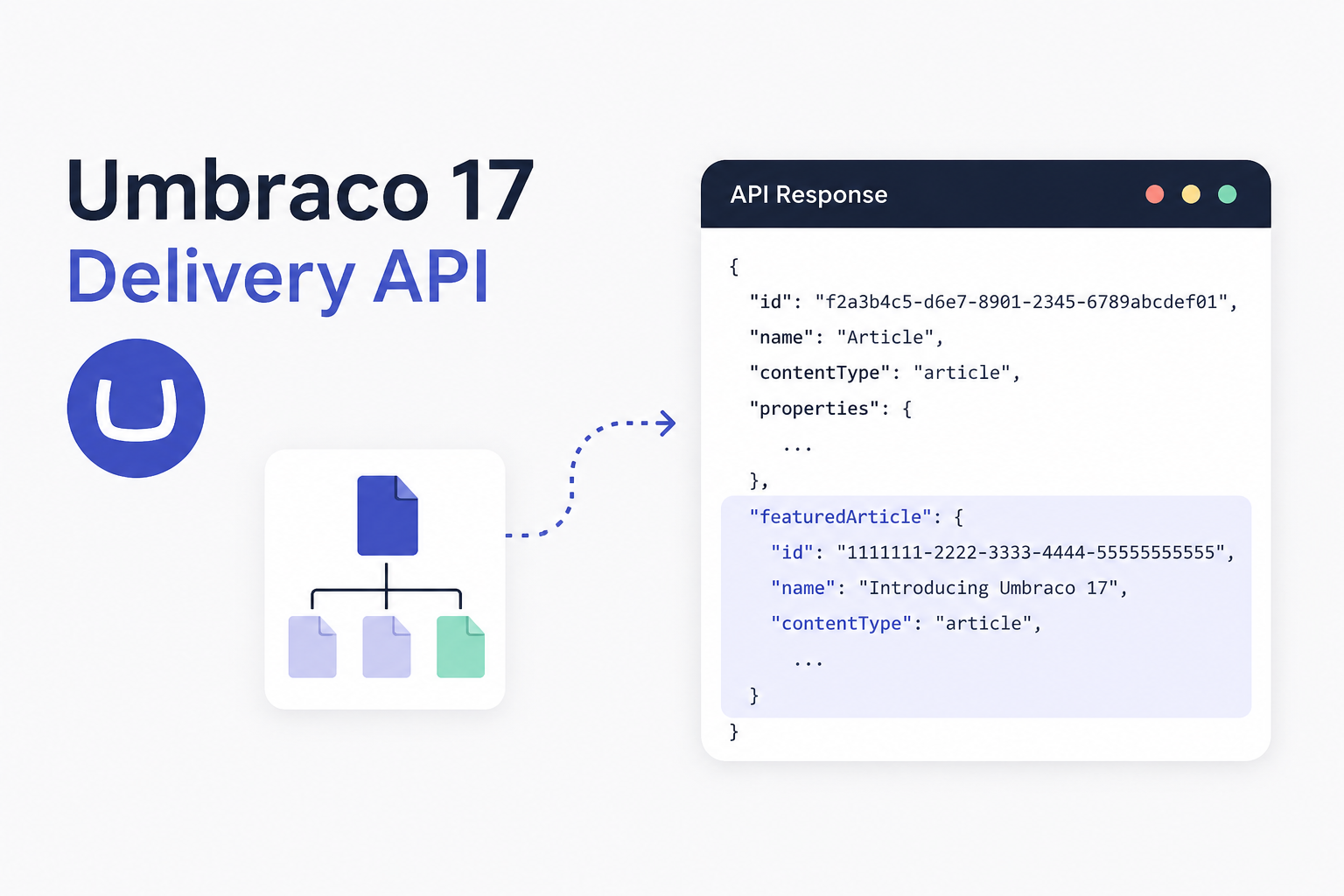
Quick Tip: Extending the Delivery API's Content Response
A quick look at how to extend Umbraco 17’s Delivery API response with content from elsewhere in the content tree, without building a custom endpoint.
Continue Reading
A quick look at how to extend Umbraco 17’s Delivery API response with content from elsewhere in the content tree, without building a custom endpoint.
Continue Reading
GitMCP lets you connect public GitHub repositories directly to AI tools like GitHub Copilot, Claude, Cursor, and VS Code MCP clients. In this article, I show how to use GitMCP with the Umbraco source code so you can ask AI real questions based on real Umbraco code, no hallucinations, no guesses. Includes setup steps, configuration, and example prompt for Umbraco developers.
Continue Reading
During a migration from Nested Content to Block List in Umbraco 13, I noticed that the `umbracoExternalLogin` table had suddenly become empty. The reason turned out to be missing external login provider settings in my local `appsettings.json`. In this post, I explain why Umbraco automatically removes those records, reference the code behind it, and share how to avoid losing login data during local migrations.
Continue Reading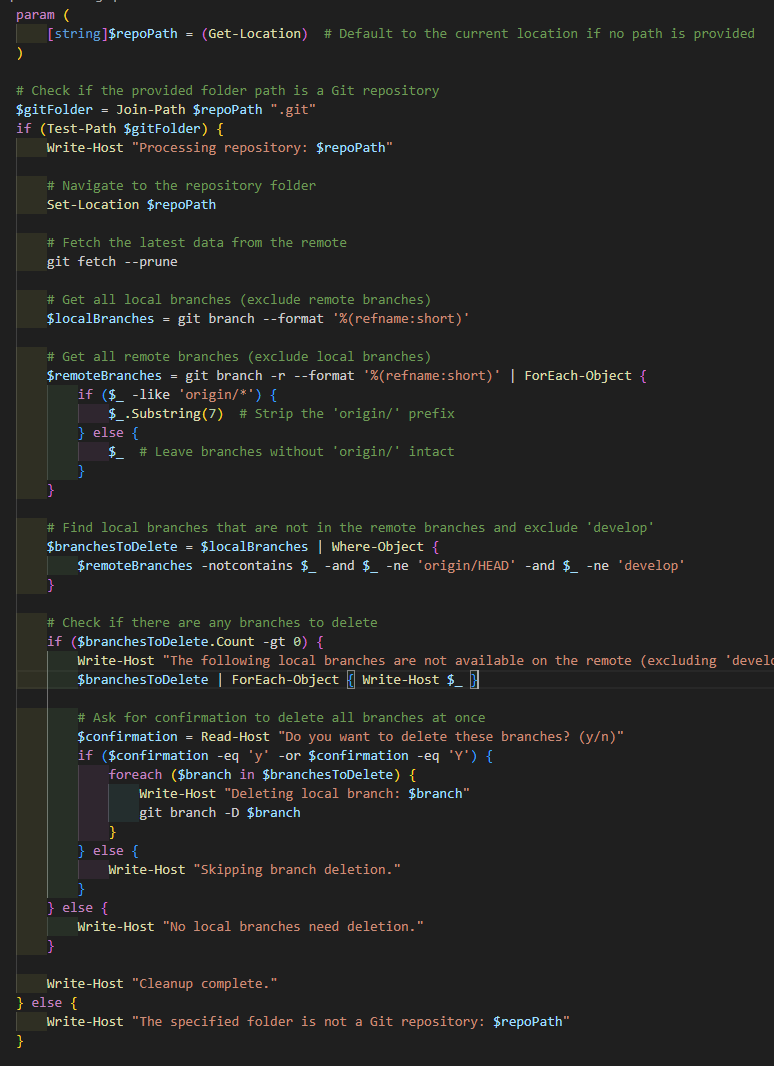
Clean up outdated local Git branches with a simple PowerShell script. Automatically detect and remove branches that no longer exist on the remote. Safe, fast, and customizable
Continue Reading
Easily bypass specific Azure Key Vault secrets—like database connections—during local development in Umbraco. Use a custom KeyVaultSecretManager and configure exclusions in Program.cs and appsettings.Development.json for a seamless and secure development experience
Continue Reading
"Learn how to simplify email sending in Umbraco projects with built-in services like IEmailSender. Discover best practices for efficient, maintainable, and future-proof email handling using Umbraco standards."
Continue Reading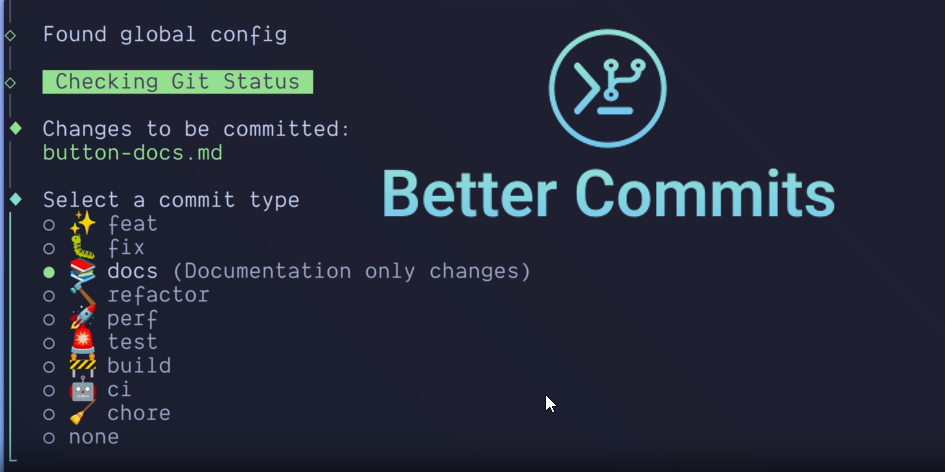
Better Commits is a CLI for writing better commits, following the conventional commits specification.
Continue Reading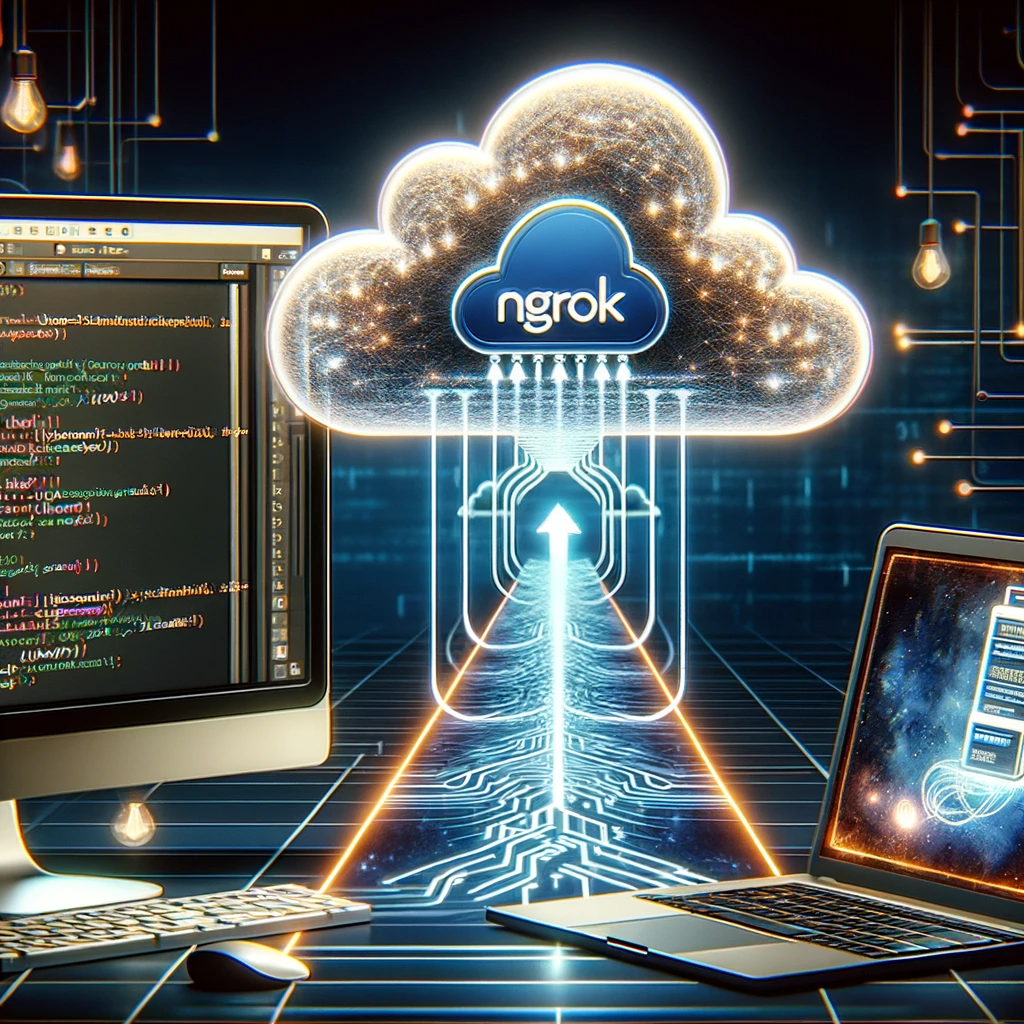
I use Ngrok as a tool to expose my local server to the internet. It helps me by creating a secure tunnel from the public internet to my application on my local machine.
This is extremely useful when I need to test an external web service that is pushing data to our applications. Especially when there is an error with that service in production, or when I can't use it directly for local development. Sometimes the error only occurs in your web application in production mode. Then, it could be a data error where your local environments can't access this data directly.
Continue Reading
So with all our projects at TRES, we don't want to store all the media in source control. But if we are working locally we want to have media visible. This means many developers download media from the Test environment and then run the site. This is quickly done for a simple site, but sometimes our sites contain Gigabytes of data.
So why not manipulate the media URL to point to our test environment?
Continue Reading